
Framework
LS Core
Foundation System
Cross-Project Architecture
Base Interface Logic
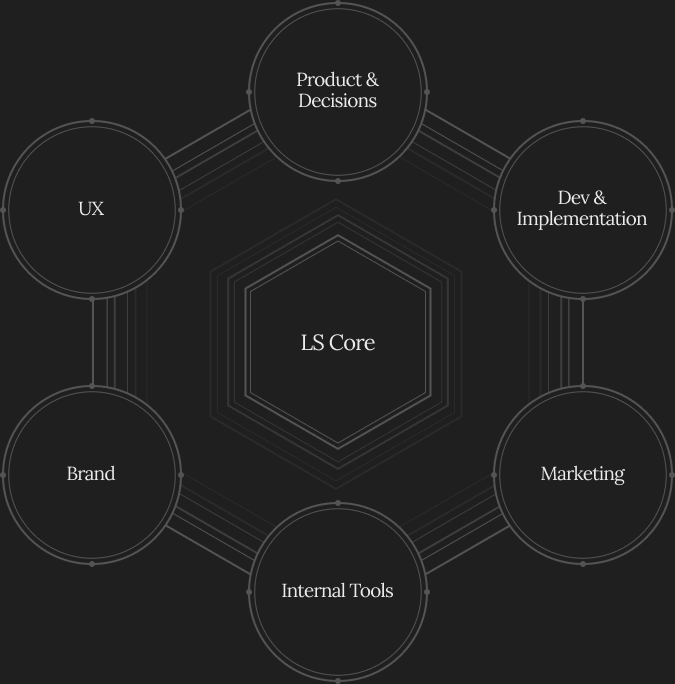
LS Core is my framework for system-driven design — defining how I structure, reason about, and scale complex interface work across products, teams, and time.
It is not a product, template, or off-the-shelf design system.
LS Core is the underlying methodology I use to introduce clarity, structure, and long-term resilience into UI, UX, and product design — without sacrificing creative freedom or contextual adaptability.
When a project requires a structured interface system, I don’t begin with components or screens in isolation. I begin by establishing the underlying logic — creating a coherent framework that can support design decisions as the work evolves.
The Problem
Across industries and product types, I’ve consistently encountered the same pattern.
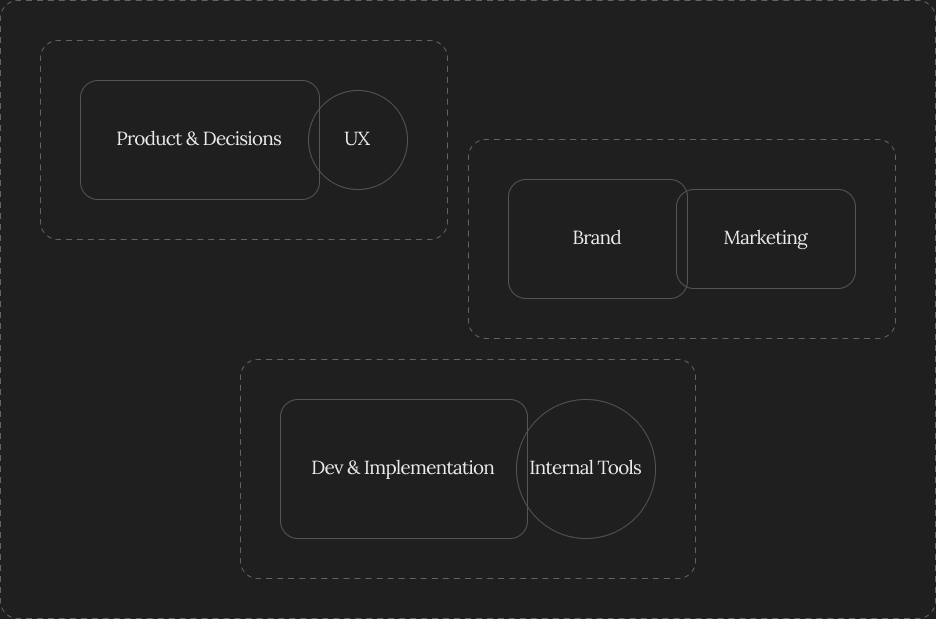
Products are pushed to launch fast. Features expand quickly. Visual design often leads under tight timelines, while UX strategy, information architecture, and brand positioning are deferred — or skipped entirely. Structural thinking arrives late, if at all.
Over time, products accumulate decisions made across teams, tools, features, feedback loops, and touchpoints. As this complexity grows, the relationship between intent, implementation, and product behaviour becomes harder to maintain.
Files fragment. Assets drift. Teams change. Workflows evolve.
AI-generated output is introduced inconsistently, further eroding alignment.
Guidelines weaken across product, marketing, branding, and internal tools.
The result is familiar:
- Inconsistency across interfaces
- Slow onboarding for new contributors
- Unclear or contradictory rules
- Friction between teams
- High cost for even modest changes
The Approach
This is why I insist on starting with a clear system framework before design execution.
LS Core was shaped through years of hands-on work across digital products, interfaces, websites, and structured design projects, informed by established design-system practices and real production constraints.
This approach aligns design work with the broader UX roadmap and team reality — ensuring that products are built on foundations that can support long-term growth.
What clients and teams receive is not a rigid solution, but a working framework they can evolve responsibly over time.
System-Driven
Design systems are not new — but they are often misunderstood.
A system is not a set of restrictions.
It is a shared logic that enables better decisions.
Terms like design system or product system can feel technical or limiting, but in practice, a system simply establishes clarity around how things relate, scale, and adapt.
Modern tools like Figma make it possible to grow these structures flexibly and incrementally. As a result, system-driven thinking is no longer reserved for large enterprises — it is relevant to digital products at any scale.
LS Core frames systems as enablers, not constraints.
Creative Freedom
Many design systems are associated with heavy UI kits, rigid component libraries, and exhaustive documentation — often locking teams into predefined outcomes.
Enterprise systems handed to agencies frequently prioritise control over creativity, leaving little room for exploration or evolution.
LS Core takes a different stance.
The system defines how things work together, not how they must look.
It establishes structure without prescribing expression.
Rules exist only to support reasoning, not to dictate outcomes. Naming conventions, file structures, and relationships are adapted per project — while the underlying logic remains consistent.
What stays constant is methodology.
What changes is expression.
This makes the framework context-agnostic — applicable to enterprise platforms, marketing ecosystems, and state-driven interfaces alike.
AI & Systems
The rise of AI-generated interfaces makes system-level thinking more critical, not less.
Prompt-driven outputs can bypass foundational reasoning, introducing design decisions without clear intent or traceability. Over time, this limits a product’s ability to grow coherently — much like off-the-shelf templates or generic UI kits.
A strong system framework keeps ownership of structure, logic, and decision-making within the team — not embedded in third-party tools or opaque automation.
LS Core is tool-agnostic.
AI is neither rejected nor relied upon.
It is integrated where useful — without replacing architectural thinking or weakening foundations. Structure remains human-driven, explicit, and adaptable.
Outcomes
Working at a system level enables teams to:
- Start projects with shared structure and clarity
- Scale interfaces without losing consistency
- Introduce new features or contributors without reworking foundations
- Reduce friction between design and development
- Maintain long-term system health as products evolve
The value of this approach compounds over time — especially as scope and complexity increase.
LS Core is not a static artefact.
It is a living framework that evolves through real projects, real teams, and real constraints.
It reflects how I think, how I collaborate, and how I approach complex design problems with a long-term perspective.
When working together on system-level design, this framework underpins the work.
Next Steps
Dive deeper into how this framework adapts at product level — where foundations, primitives, and brand logic are applied in practice.

If this way of thinking resonates — and you’re dealing with complexity around systems, scale, or product clarity — I work with teams and founders to apply this logic in real-world platforms.
 Back to work
© 2006–2026 Loris Stavrinides
Client and third-party work © respective copyright holders
